
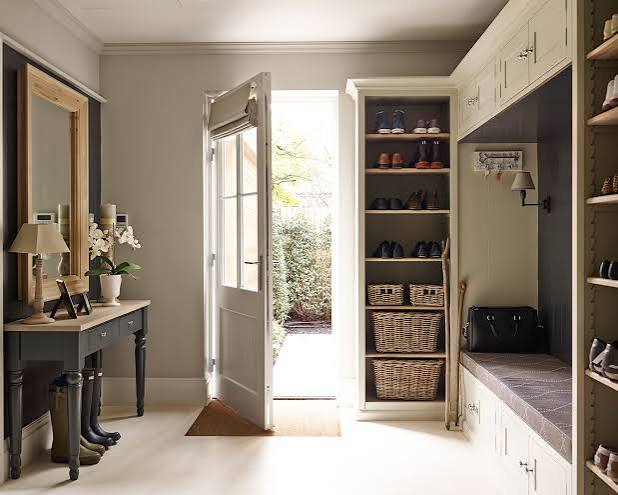

The Closet That Absorbs Everything and Returns Nothing
The entry or coat closet is typically the first storage space encountered upon entering a home and one of the most consistently disorganized. The reasons are structural: it receives items from multiple household members in the transition moments of arriving and departing, when organizational precision is lowest. Coats, umbrellas, shoes, bags, sports equipment, seasonal items, and objects awaiting a destination all accumulate in a space whose organization was probably never explicitly designed for how the household actually uses it.
The coat closet that functions well is one that was explicitly designed for the specific items and habits of the household using it — not one configured to a standard layout that may not match those habits at all.
Audit Before You Organize
The first step in coat closet organization is the same as garage organization — removing everything and sorting honestly. The coat closet in the average home contains: coats and jackets currently in rotation, coats and jackets from previous seasons that should be in bedroom closets or long-term storage, items awaiting return to other rooms, sports equipment, seasonal accessories, and at least a few items that belong nowhere obvious and ended up there by default.
Remove everything. Assess honestly. Return only what belongs in a coat closet: current-season outerwear, shoes and boots for daily use, bags in current rotation, umbrellas, and any daily-use items that the household realistically uses at departure or arrival.
The Zone Configuration That Matches Real Behavior
Coat closets fail most commonly because their configuration doesn’t match how items are used. The standard single rod at 60 inches for full-length coats wastes the lower half of the closet that shorter coats, jackets, and outerwear don’t reach. A double-rod configuration (short coats on one rod, longer coats on another) uses the full height more efficiently.
The bottom section below the lower rod — typically 36–40 inches — can accommodate a shoe rack for several pairs of boots and shoes, a small storage cube or drawer unit for accessories and gloves, or a set of hooks for bags and backpacks at a reachable height for children. Each of these elements serves a specific storage need that the standard single-rod closet configuration leaves unaddressed.
Adding Hooks: The Transformation of the Door and Side Walls
The back wall and side walls of a coat closet, and the back of the door, are storage surfaces that most closet configurations ignore. Wall-mounted hooks at different heights on the back wall — adult height (60 inches), child height (42 inches), and low hooks (24 inches) for bags and dog leashes — provide organized, accessible storage for the items most frequently touched in a coat closet.
The back of the door accommodates an over-door hook rack or a mounted hook rail that holds additional items without consuming interior closet space. In a closet too small for interior hooks, a door-mounted system provides the full hook capacity within the door’s footprint.
Seasonal Rotation: The Maintenance Practice That Keeps It Functional
A coat closet stays organized over time only if the items in it rotate seasonally. The closet loaded with current-season coats and a few essential accessories in October should have most of those coats replaced with lighter-weight options by April — the winter coats going to bedroom closet storage or a dedicated seasonal storage location.
A coat closet that accumulates 3–4 seasons of outerwear without rotation stops functioning within a year of any organization effort. The seasonal rotation practice — moving out-of-season items out and in-season items in — is the ongoing maintenance that preserves the organization rather than requiring periodic complete reorganizations.