
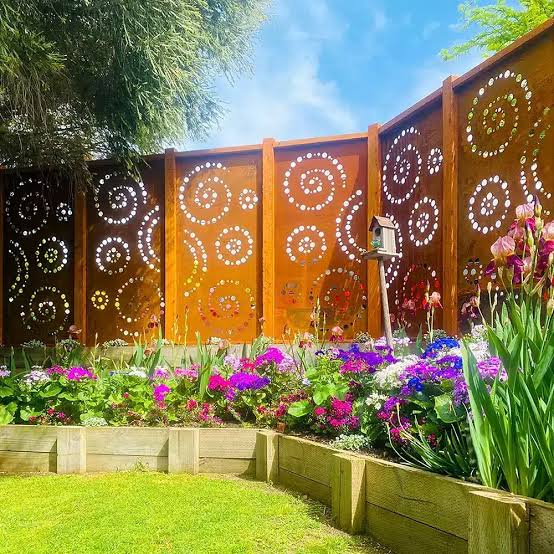

The Privacy Problem That Fences Create
The standard residential response to a loss of garden privacy — a neighbor’s new second story, a new structure that creates unwanted sight lines, the gradual removal of mature plantings — is to install a fence. Fences address the privacy need immediately, but they also create a visual boundary that makes both the garden and the neighbor’s space feel smaller, introduce a hard architectural element into what might otherwise be a naturalistic setting, and require ongoing maintenance (staining, painting, board replacement) that many homeowners underestimate.
Planted screening — using shrubs, trees, grasses, and climbing plants to create privacy barriers — addresses the same sight lines while adding ecological value, visual softness, seasonal interest, and long-term beauty that fence alternatives simply don’t provide.
Evergreen Screening: Year-Round Privacy
The most immediately useful screening plants for privacy are evergreens — they provide coverage twelve months of the year rather than only during the growing season. The selection depends on the available space and the screening height needed.
For tight spaces with height restrictions: Sky Pencil holly (a narrow, upright evergreen that grows 6–10 feet tall by only 2 feet wide) provides year-round screening without the horizontal spread of most shrubs. Emerald Green arborvitae (8–10 feet tall by 2–3 feet wide) is the most commonly planted evergreen screen for good reason — it’s fast-growing (8–12 inches per year), dense, and maintains a naturally columnar shape without pruning. For wider spaces where a hedge is appropriate: Nellie Stevens holly and American holly both form dense, tall screens with wildlife value from their fruit.
Deciduous Plants for Spring-Through-Fall Privacy
In climates where winter privacy is less critical (warmer regions, spaces where the view concern is a summer activity like a pool), deciduous plants provide impressive screening during the months it matters most and allow winter light into the garden when screening is less needed.
Ornamental grasses are among the fastest and most effective deciduous screens: Karl Foerster feather reed grass reaches 5–6 feet and provides a dense visual screen from May through winter (when the dried stalks maintain partial screening even without foliage). Native switchgrass (Panicum virgatum) varieties reach 4–6 feet and provide movement and sound as a privacy screen. Bamboo (specifically clumping varieties like Fargesia — not running varieties that spread aggressively) creates dense, tall screening rapidly.
Vertical Layering: Creating the Illusion of a Garden Room
The most effective planted privacy solutions layer plants at multiple heights: tall screening trees or shrubs at the perimeter provide the high screening; medium shrubs at 3–5 feet fill the middle layer; low plantings at the base soften the transition to the garden floor. This layered approach creates a garden room effect — the sense of being enclosed in a planted space rather than separated from a neighbor by a barrier.
The distinction between a fence-with-plants-in-front and a truly layered planted screen is the depth of the planting: a layered screen has 8–12 feet of plant depth from front to back, with different species at different heights creating a naturalistic wall. The result looks like a forest edge from inside the garden — a genuinely beautiful garden boundary rather than a privacy solution.
Pergolas and Trellises With Climbing Plants
Vertical structures — pergolas, trellises, arbors — covered with climbing plants address privacy overhead as well as laterally, creating shade and enclosure simultaneously. A trellis covered with climbing hydrangea (for shade gardens), climbing roses, wisteria, or fast-growing annual climbers like moonflower and black-eyed Susan vine creates a vertical privacy screen that reaches useful height within 2–3 seasons.
The structural approach is appropriate for sight lines that originate at a height above most planted screening — a neighbor’s upper-story window, an elevated deck — where even a 10-foot shrub doesn’t interrupt the sight line completely. A pergola at 8 feet with overhead coverage extends the screening plane above the typical planted screen height.