

The Purchase Made on Appearance That Doesn’t Perform
Window treatments are selected primarily on appearance — the look of a roman shade, the fullness of a curtain, the clean lines of a roller blind — and then discovered to not actually provide the light control, privacy, or thermal performance the room needs. A beautiful linen curtain selected for its look and texture that doesn’t block early morning light in a bedroom, or a roller shade that looks clean and contemporary but provides no privacy at night from the street, is a functional failure dressed in attractive fabric.
Selecting window treatments for performance first and appearance second — within a performance-compatible range — produces rooms that work as well as they look.
The Four Functions Window Treatments Need to Address
Light filtering: how much light does the room need to admit or block at different times of day? A bedroom needs the ability to fully block light during sleep; a living room may need only diffusion of harsh direct sun. A south-facing office needs glare control without complete darkness. The light filtering requirement determines the opacity range needed.
Privacy: daytime privacy (preventing view from the street into an illuminated interior) and nighttime privacy (preventing view from the street into a lit interior) are different challenges. Sheer curtains provide daytime privacy while admitting light (you can see out but others can’t see in when exterior light is brighter than interior light); at night, when interior lighting reverses this relationship, sheers provide no privacy at all. Understanding this difference prevents the purchase of sheer curtains for a room where nighttime privacy is the primary need.
Blackout vs. Light-Filtering vs. Sheer: The Opacity Spectrum
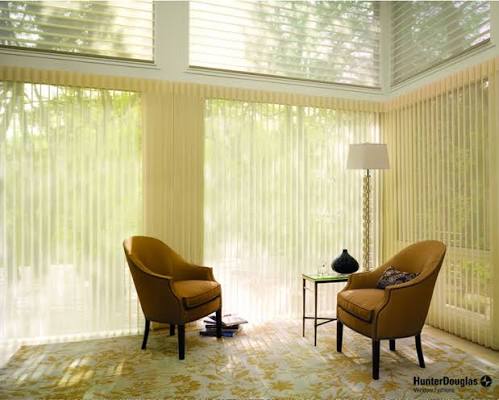
Sheer window treatments (sheers, light-filtering fabrics, solar shades with open weave) admit diffused light while reducing glare and providing daytime privacy. They don’t block light adequately for sleep. Light-filtering treatments (semi-opaque fabric, woven wood shades, linen curtains) reduce light significantly but don’t achieve darkness — appropriate for rooms where dimming but not blacking out is the goal.
Blackout treatments (coated roller shades, blackout curtain liners, cellular shades with blackout fabric) block essentially all incoming light when properly installed. The installation caveat is significant: a blackout shade that doesn’t cover the full window opening, or curtains with gaps at the sides and top, allow meaningful light infiltration at the edges regardless of the fabric’s opacity. True blackout performance requires edge-sealing installation.
Layering for Full Range of Control
The most functionally flexible window treatment is a layered system: a sheer or light-filtering layer that provides daytime privacy and glare reduction while admitting light, combined with a blackout layer that can be deployed for full darkness when needed. This is the hotel room approach that many homeowners discover and wish they’d implemented from the start.
Layered installation options: a roller shade (light filtering or blackout) mounted inside the window frame, with curtain panels mounted on a separate rod outside the frame — the shade handles functional control, the curtains handle aesthetics and the optional addition of the blackout layer. Double curtain rods allow a sheer panel on the inner rod and a heavier curtain on the outer rod.
Thermal Performance: The Benefit Most Homeowners Don’t Maximize
Window treatments can meaningfully affect a room’s thermal performance by reducing heat gain in summer and heat loss in winter. Cellular shades (honeycomb shades) are the most thermally effective window treatment available for residential use — their air-filled cell structure provides insulating value that flat shades and curtains can’t match.
Closing blinds, shades, and curtains in summer during peak solar hours reduces air conditioning load. Closing them in winter at night reduces heat loss at the window glass. These aren’t dramatic energy savings at the individual window level but are meaningful summed across a home. The combination of blackout function, privacy, and thermal benefit makes cellular shades the highest-performing window treatment available even when they’re not the most visually interesting option.