
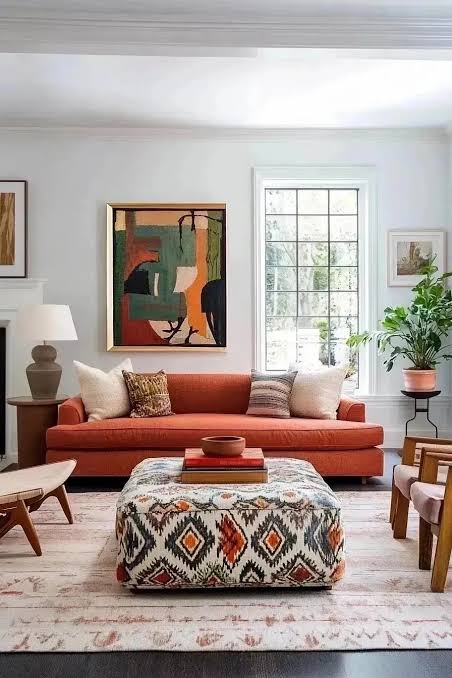

The Reality Most Homes Actually Inhabit
Design photography and showroom environments present a fiction: the fully curated home where every piece was selected together from a coherent aesthetic vision. The reality of most residential interiors is furniture accumulated across years, relationships, moves, inheritances, and changing tastes — pieces from different periods, different styles, and different quality levels that now share the same rooms.
Cohesion in these real conditions isn’t achieved by starting over — it’s achieved through unifying elements that create visual continuity among pieces that weren’t originally selected to coexist. The techniques that create cohesion are learnable and don’t require wholesale furniture replacement.
The Color Palette Unifier
The most effective cohesion technique for mixed furniture is establishing a consistent color palette across the room’s textiles, accessories, and painted surfaces, and letting the furniture’s diversity exist within that palette. When every pillow, throw, rug, and accessory in a room shares a consistent color story, the furniture beneath and around these textiles reads as unified even when the individual pieces come from different eras and styles.
The palette doesn’t need to be monochromatic or restrictive — it needs to be consistent. A room where every textile contains some amount of the same terracotta and warm white and natural tone creates cohesion that allows a mid-century armchair, a traditional sofa, and a contemporary side table to coexist without reading as a furniture showroom’s discount section.
The Metal Finish Consistency Rule
The metal finishes in a room — hardware on furniture pieces, the legs of side tables and lamps, picture frame edges, decorative objects in metal — have an outsized effect on a room’s apparent cohesion. When every metal element is in the same finish family (all warm metals: brass, bronze, copper, warm gold; or all cool metals: chrome, nickel, silver, steel), the room reads as considered regardless of how mixed its furniture is.
Mixing metal finishes in the same piece is also now widely embraced by designers — a brass-legged table with chrome handles, or a warm gold lamp with a chrome base, is an intentional mix that reads differently from accidental mismatched metals throughout a room. The distinction is intentionality versus randomness, which manifests in whether the mixing is consistent or scattered.
Paint as a Unifier: Walls That Create Context
A room where every wall is the same color creates a unified backdrop that makes mixed furniture read as collected rather than mismatched. The walls become the room’s constant — the furniture diversity plays within a consistent frame. This is the gallery wall principle applied to the whole room: the neutral consistent context allows the variable content to coexist without fighting.
A room where different walls are different colors, or where wall colors change from room to adjacent room in a way that’s visible from the furniture arrangement, creates visual interruptions that make mixed furniture harder to reconcile. Simplifying the wall treatment while allowing furniture diversity to exist within it is often more effective than attempting to create furniture cohesion in a visually complex wall environment.
Scale Editing: The Subtler Form of Cohesion
Furniture that varies dramatically in scale — very large pieces next to very small pieces, very heavy visual weight next to very delicate pieces — reads as less cohesive than furniture that varies in style but maintains consistent scale. A substantial sofa with a tiny side table looks mismatched in a way that has nothing to do with style; it’s a scale mismatch that disrupts the visual balance of the arrangement.
Before concluding that a mixed furniture arrangement doesn’t work stylistically, check whether the problem is actually scale — whether replacing one very small piece with a more proportionally appropriate alternative resolves the visual tension. Scale editing is a less disruptive and less expensive intervention than style editing and often achieves the cohesion effect that style changes were assumed to require.